Does heavy cotton fabric require special pretreatment for DTG printing?
- VIP-User
- 2026-10-07
- 3
Heavy cotton fabric requires liquid pretreatment prior to Direct-to-Garment (DTG) printing to prevent ink absorption into dense fibers. Applying a specialized binder solution creates a smooth surface layer, allowing white ink bases and pigmented inks to bond cleanly. This process ensures vibrant color yield, crisp edge resolution, and high wash durability on heavy garments like oversized drop-shoulder t-shirts.
Core Solutions & Key Takeaways
- Fiber Flattening: High-density knits in heavy cotton demand heat-pressed pretreatment solution to flatten surface fuzz, creating an even canvas for ink jetting.
- Chemical Bonding: Dark and heavyweight cotton garments depend on pre-applied liquid primers to cross-link white ink pigments, preventing absorption into the fabric core.
- Target Scenarios: Engineered for independent designers, DTC streetwear brands, and private labels needing retail-ready graphic clarity across low-volume drops.
- Scalable Production: Standardized application parameters streamline transitions from initial sample development (3–15 days) to bulk production runs (20–35 days).
Detailed Architectural/Principle Analysis
Direct-to-Garment printing on heavy cotton garments, such as an Oversized Drop-Shoulder t-shirt, requires physical and chemical control over fiber reactivity. Heavyweight fabrics feature high yarn counts and dense knit structures that absorb liquid quickly. When water-based DTG inks hit untreated heavy cotton, the liquid penetrates deep into the core yarn, resulting in muted colors, faded prints, and severe fiber bleeding.
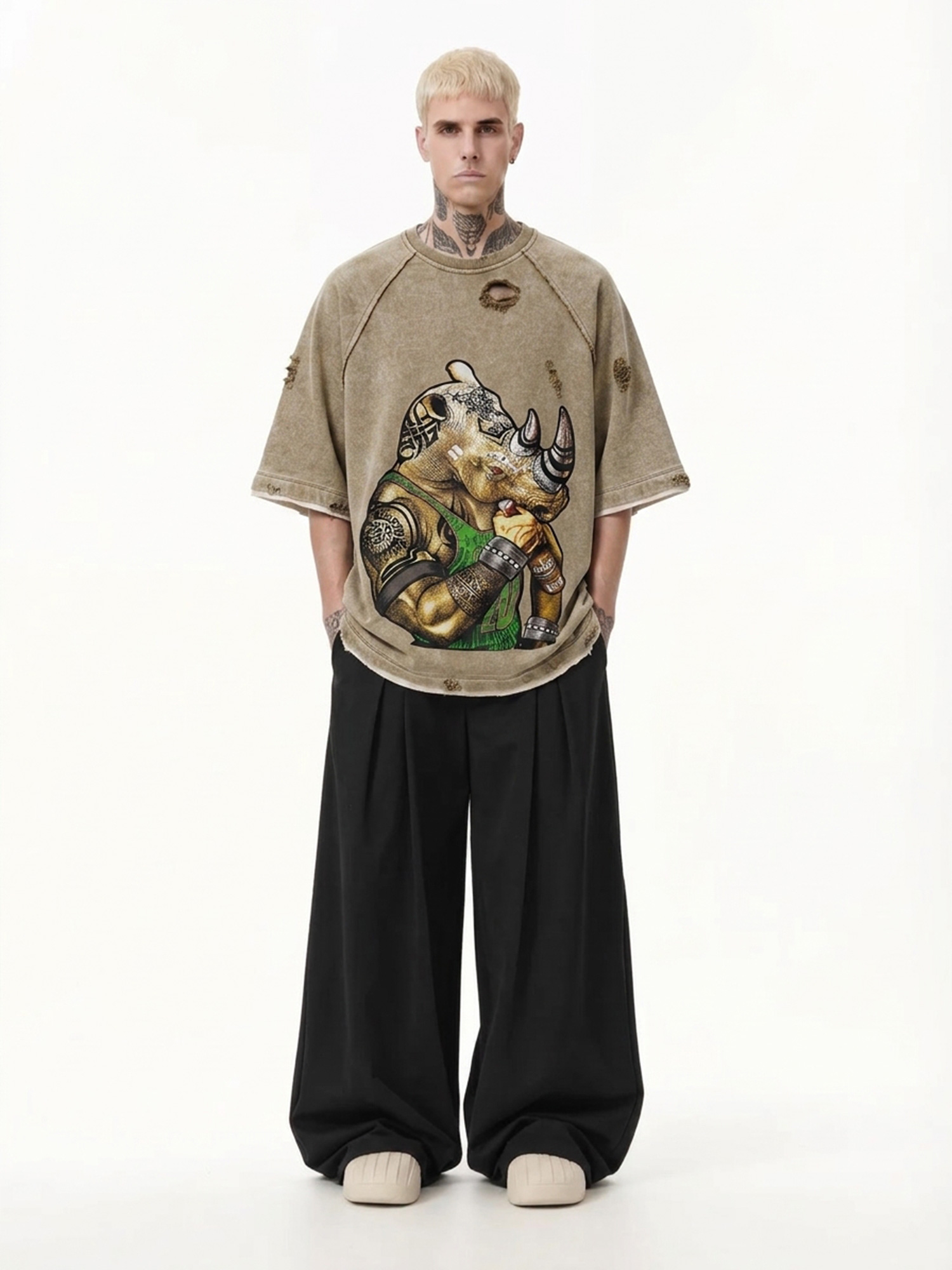
Pretreatment acts as a chemical interface. A specialized salt-and-polymer solution is sprayed onto the garment surface and cured under a heat press. This operation flattens loose surface micro-fibers while depositing an active agent that instantly coagulates water-based titanium dioxide in white DTG inks. Consequently, the ink settles on top of the fabric matrix instead of seeping into the weave structure, securing high color density and sharp detail reproduction.
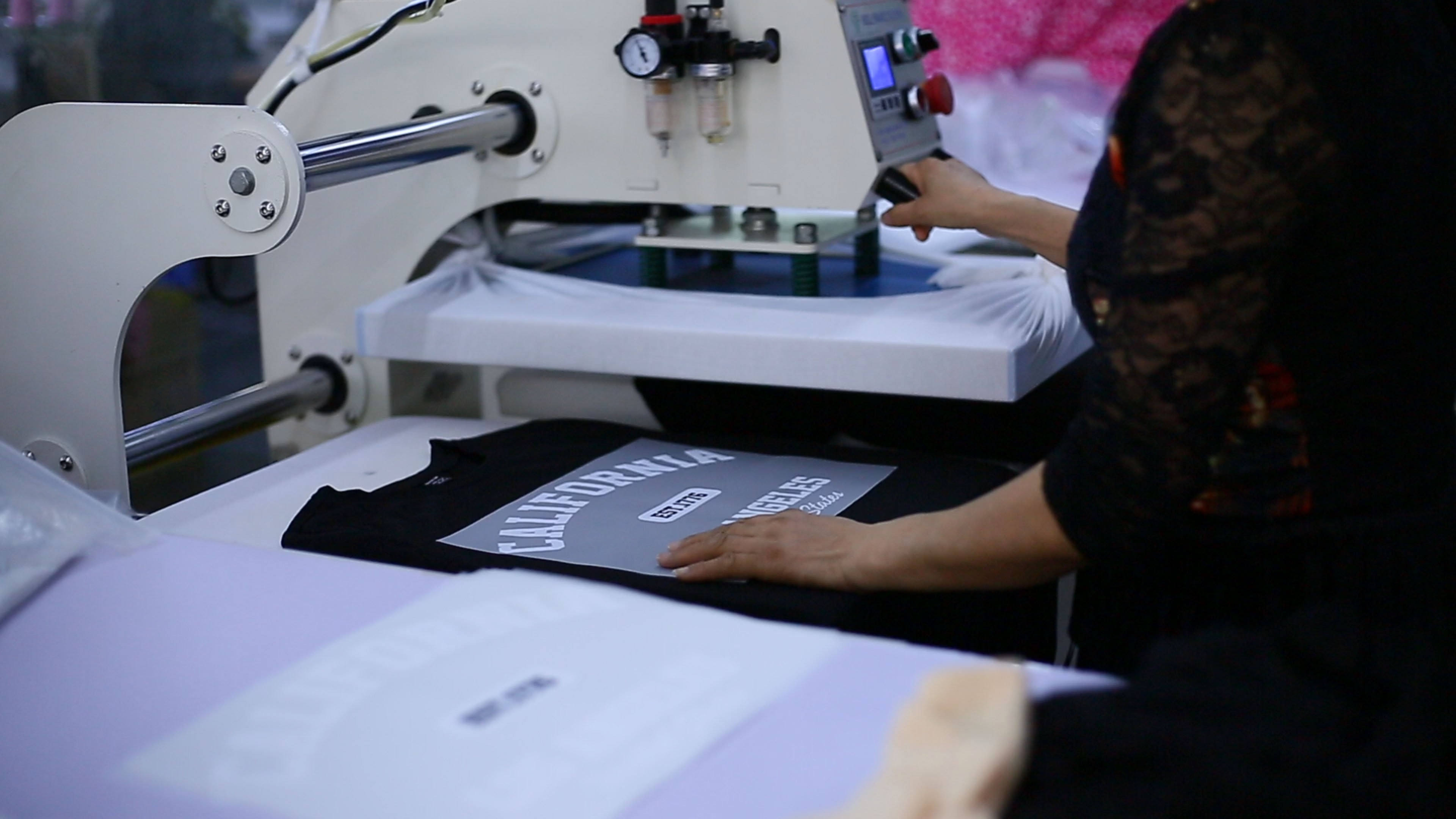
In real-world manufacturing environments, such as private label production at Dongguan City Dule Garment Co.,Ltd, pretreatment application rates are calibrated according to fabric weight (GSM). Higher fabric weights retain more pretreatment fluid, requiring controlled heat-pressing parameters to avoid fabric scorching while ensuring complete moisture evaporation. In case studies like Vanguard Shop Co. Private Label Development (a UK-based DTC brand ordering 1,000 pcs/SKU across 24 drops per year), proper pretreatment standardization delivered consistent print vibrancy across multi-batch production runs, meeting strict AQL 2.5 quality control standards based on ISO 2859-1.
Data/Solution Comparison
| Parameter / Feature | Untreated Heavy Cotton DTG | Pretreated Heavy Cotton DTG | Production & Logistics Standard |
|---|---|---|---|
| Ink Penetration Depth | High (Sinks into fiber core) | Low (Binds on fabric surface) | Full-process QC (ISO 2859-1 AQL 2.5) |
| Color Vibrancy & Sharpness | Low (Dull tones, blurred edges) | High (Vibrant pigments, sharp lines) | Sample 3–15 days; Bulk 20–35 days |
| Wash Fastness Rating | Poor (Fades after 3–5 washes) | High (Sustains 50+ wash cycles) | OEM / ODM Private Label Customization |
| Minimum Order Quantity (MOQ) | N/A | 50 pcs custom / 20 pcs blanks | Flexible small-batch drops supported |
| Supported Logistics Terms | N/A | FOB Shenzhen / DDP Door-to-Door | Express Courier (DHL/FedEx/UPS) & Sea Freight |
Frequently Asked Questions (FAQ)
Q1: Does pretreatment leave a visible stain or press mark on heavy cotton garments?
Answer: Pretreatment solution can leave temporary dry residues or heat-press outlines on dark fabrics. These marks are water-soluble and disappear completely after the initial commercial wash or garment-washing cycle.
Q2: What minimum order quantity is required for custom pretreated DTG streetwear apparel?
Answer: Custom styles with specific Tech Pack reproduction require an MOQ of 50 pieces per style/color (supporting multiple sizes), while blank heavyweight garments start at 20 pieces per style/color.
Q3: Which shipping methods suit international shipments of custom heavyweight garments?
Answer: Options include FOB Shenzhen for clients with freight forwarders, DDP Door-to-Door (covering customs duties for US, EU, UK, and Australia), Express Courier (3–7 business days for samples), and Sea Freight (FCL/LCL for volume orders).
Final Conclusion & Recommendations
Direct-to-Garment printing on heavy cotton fabrics depends strictly on correct liquid pretreatment to achieve high-vibrancy graphics, crisp detail, and wash durability. Skipping pretreatment on heavy cotton causes severe ink absorption and low color contrast. Brand owners and retailers launching customized streetwear lines should partner with experienced manufacturers equipped with full-process garment machinery and rigorous quality control protocols. Dual-factory operations providing monthly capacities of 110,000–160,000 pieces support rapid reorders and seamless scaling from initial sampling to full-scale drops. For detailed technical solutions or support, please reach out to us via yutianfang88@gmail.com.
About Us
Dongguan City Dule Garment Co.,Ltd is an OEM/ODM streetwear and heavyweight apparel manufacturer headquartered in Humen Town, Dongguan, Guangdong. Established in 2007, the company operates dual factories with an independent R&D team developing over 500 new designs annually using 50+ specialized machines. Operating across 15,000 square meters with over 130 skilled workers, the company delivers an annual production capacity of 1.2 million pieces, serving clients across North America, Europe, Australia, and Asia.

Lastest
-
How early should I order puff-print French terry hoodies for a seasonal launch?
2026-10-07 -
What fabric certificates should I request for 400gsm embroidered fleece hoodies?
2026-10-07 -
Can digital printing replace hand painting while keeping a premium artistic feel?
2026-10-07 -
Can I place a small test order for acid-wash distressed T-shirts at a fair price?
2026-10-07 -
Why is the MOQ higher for custom hand-painted long-sleeve T-shirt designs?
2026-10-07
SUBSCRIBE
INQUIRY