How does stitch count impact the unit cost of 400gsm embroidered hoodies?
- VIP-User
- 2026-10-03
- 5
Stitch count directly dictates unit cost in 400gsm heavyweight embroidered hoodies by increasing machine run time, thread consumption, and stabilizer requirements. High-density designs exceeding 25,000 stitches take significantly longer to produce than low-density graphics under 10,000 stitches. Higher stitch counts elevate per-piece production costs due to extended embroidery machine operation, potential needle-breakage risk on dense fleece fabric, and higher thread volume requirements.
Core Solutions & Key Takeaways
- Machine Operating Time: Embroidery commercial pricing is calculated per thousand stitches (k-stitches). Higher stitch counts extend head operation hours, directly raising unit labor and machine depreciation expenses.
- Stabilizer & Underlay Density: Heavyweight fleece fabrics (such as 400gsm crewnecks and hoodies) demand heavy-duty cutaway or tearaway backing paper to eliminate fabric distortion and puckering, increasing raw material consumption.
- Needle Wear & Thread Volume: High stitch counts utilize greater yarn linear meters and accelerate needle dulling on dense 400gsm loopback fleece, contributing to maintenance overhead.
- Batch Size Optimization: Flexible production structures—such as low minimum order quantities starting at 50 pieces per custom style—help independent streetwear brands balance sample setup fees against bulk embroidery stitch costs.
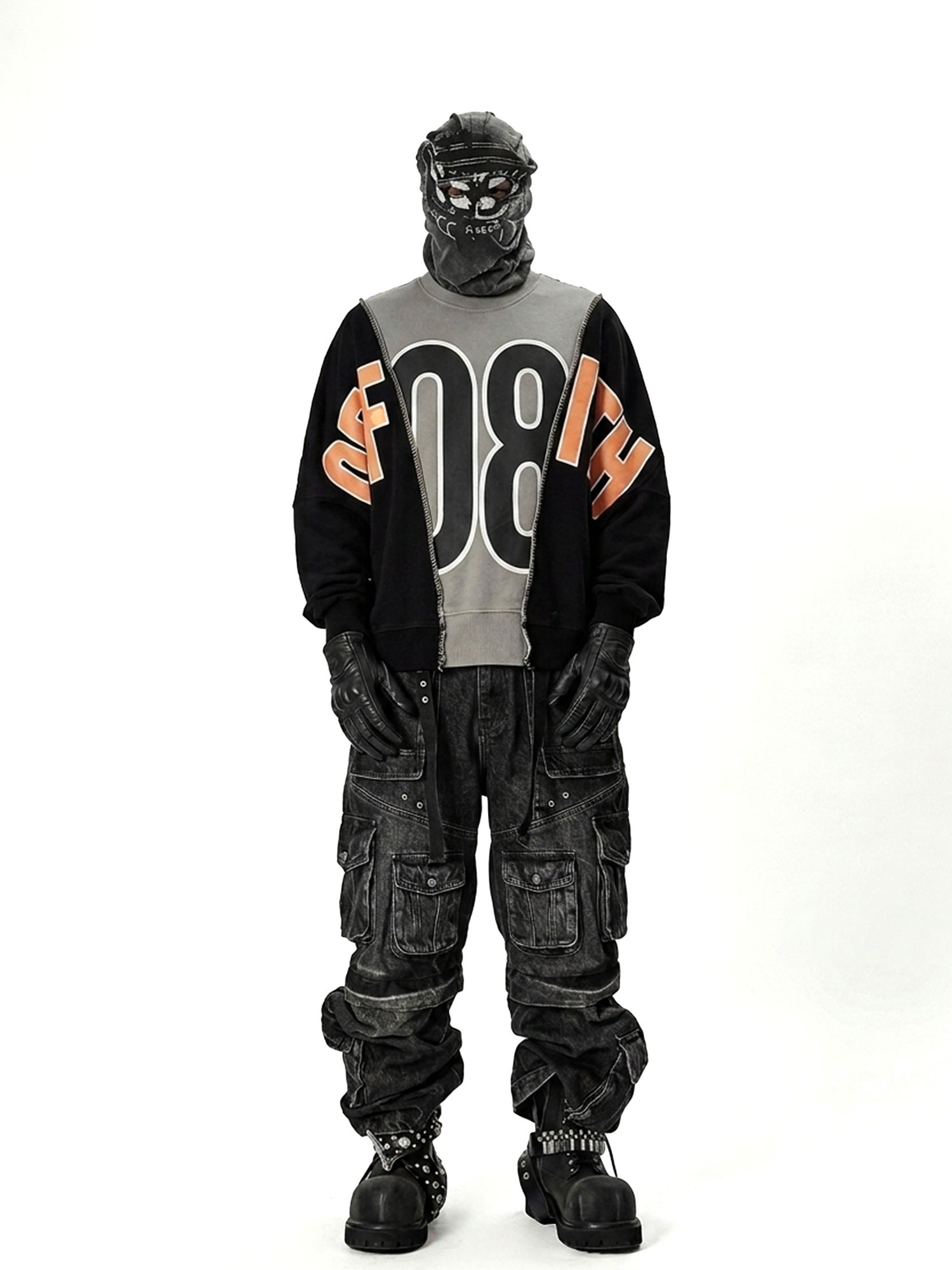
Detailed Architectural/Principle Analysis
In heavyweight garment manufacturing, stitch count serves as the primary variable determining automated embroidery pricing. A standard industrial multi-head embroidery machine runs at speeds ranging between 600 and 850 stitches per minute (SPM). When executing a small chest emblem with 8,000 stitches, machine cycle time remains under 12 minutes per garment batch. Conversely, large back panel graphics spanning 35,000 to 50,000 stitches require up to 60 minutes of uninterrupted machine run time, scaling unit production cost proportionally with operational duration.
Fabric weight introduces technical variables when working with 400gsm fleece or heavyweight cotton crewnecks. Thick fleece materials exhibit pile compression under high needle tension. To prevent the embroidery thread from sinking into the fabric pile, digitizers must create dense underlay stitching and use specialized top toppings alongside heavy backing stabilizers. For complex techniques like 3D puff embroidery, density factors increase further due to foam insertion and additional satin cover stitching, requiring precise digitizing Tech Pack reproduction to avoid thread breakage during high-speed production runs.
For DTC brands and private label operations requiring fast market drops—such as fulfillment models running 1,000 pieces per SKU across multiple annual drops—managing stitch count helps control margin efficiency. Structuring artworks around optimized stitch density allows streetwear labels to maintain high visual impact while suppressing unnecessary machine dwelling time on bulk runs.
Data/Solution Comparison
| Embroidery Design Type | Stitch Count Range | Machine Run Time (per piece) | Thread & Backing Material Impact | Relative Unit Cost Scale |
|---|---|---|---|---|
| Micro Chest Logo / Label | 3,000 – 7,000 | Fast (< 10 mins) | Low thread usage; light backing required | Low |
| Standard Mid-Chest Graphic | 8,000 – 18,000 | Moderate (10–22 mins) | Standard thread volume; double backing | Moderate |
| Full Back Artwork / Oversized | 25,000 – 50,000+ | Extended (30–60+ mins) | High thread volume; heavy cutaway stabilizer | High |
| 3D Puff / High-Density Patch | 15,000 – 35,000 | Extended + Manual Prep | Foam layer + dense satin top stitching | Very High |
Frequently Asked Questions (FAQ)
Why does 400gsm heavyweight fleece require extra stabilization during embroidery?
Thick 400gsm fleece fabric has inherent stretch and surface pile. Without heavy-duty stabilizer backing and dedicated underlay stitches, high-tension embroidery needles pull the fabric inward, causing outline misalignment, fabric puckering, and thread sinkage.
Does 3D puff embroidery increase unit cost faster than flat embroidery?
Yes. 3D puff embroidery requires higher stitch density to fully cover the underlying EVA foam, alongside manual trimming and slower machine speeds to prevent foam displacement, leading to elevated unit costs compared to standard flat stitch graphics.
What are the typical lead times for custom embroidered samples and bulk production?
Sample development typically requires 3 to 15 days, allowing for digitizing approval and physical swatch testing. Bulk production generally takes 20 to 35 days depending on design complexity, washing specifications, and total batch size.
Final Conclusion & Recommendations
Optimizing stitch count provides a direct lever for controlling production budgets on 400gsm custom hoodies and crewneck sweatshirts. Choosing strategic placement and balanced stitch density ensures high visual impact without unnecessarily multiplying machine run time. Manufacturing frameworks offering flexible business models—including low 50-piece custom MOQs, full Tech Pack reproduction, pre-production sample approvals, and transparent logistics choices like FOB Shenzhen or DDP door-to-door delivery—enable emerging brands to effectively manage inventory costs while scaling private label drops. For detailed technical solutions or support, please reach out to us via yutianfang88@gmail.com.
About Us
Dongguan City Dule Garment Co.,Ltd (DOLUXE) is a professional OEM/ODM streetwear and heavyweight apparel manufacturer established in 2007. Operating dual production facilities totaling 15,000 square meters—including a 5,000m² primary factory in Humen, Dongguan—the company delivers an annual capacity of 1.2 million pieces. DOLUXE specializes in 480-630 GSM heavyweight hoodies, 400gsm crewnecks, t-shirts, cargo pants, jackets, and denim featuring in-house vintage wash, 3D embroidery, and puff printing. Serving over 200 brands across North America, Europe, Australia, and Asia, DOLUXE supports flexible small-batch custom drops alongside full-scale private label manufacturing.

Lastest
-
How early should I order puff-print French terry hoodies for a seasonal launch?
2026-10-03 -
What fabric certificates should I request for 400gsm embroidered fleece hoodies?
2026-10-03 -
Can digital printing replace hand painting while keeping a premium artistic feel?
2026-10-03 -
Can I place a small test order for acid-wash distressed T-shirts at a fair price?
2026-10-03 -
Why is the MOQ higher for custom hand-painted long-sleeve T-shirt designs?
2026-10-03
SUBSCRIBE
INQUIRY