What is the allowable defect percentage rate for mass DTG printed tees?
- VIP-User
- 2026-10-04
- 10
Mass production of Direct-to-Garment (DTG) printed t-shirts follows the ISO 2859-1 standard, establishing an allowable defect rate threshold of AQL 2.5 for major defects and AQL 4.0 for minor defects. In commercial garment manufacturing, overall defective output for heavy cotton DTG print t-shirts must stay below 2% to 2.5% of total shipment volume, covering print misregistration, ink curing failures, and fabric discoloration.
Core Solutions & Key Takeaways
- Acceptable Quality Limit (AQL) Standard: Bulk garment manufacturing uses ISO 2859-1 Level II sampling. Major defects (e.g., ink peeling, artwork distortion) strictly adhere to an AQL 2.5 limit, while minor cosmetic defects permit up to AQL 4.0.
- Pre-Production Sample Approval: Mitigate DTG print variances on heavy cotton garments by standardizing pre-treatment formulas and executing physical strike-offs prior to full-scale production.
- Flexible Batch Inspection: Supporting flexible production from small-batch market testing (MOQ 50 pieces per custom style) to 1,000-piece private label orders enables brands to maintain tight quality tolerances across seasonal drops.
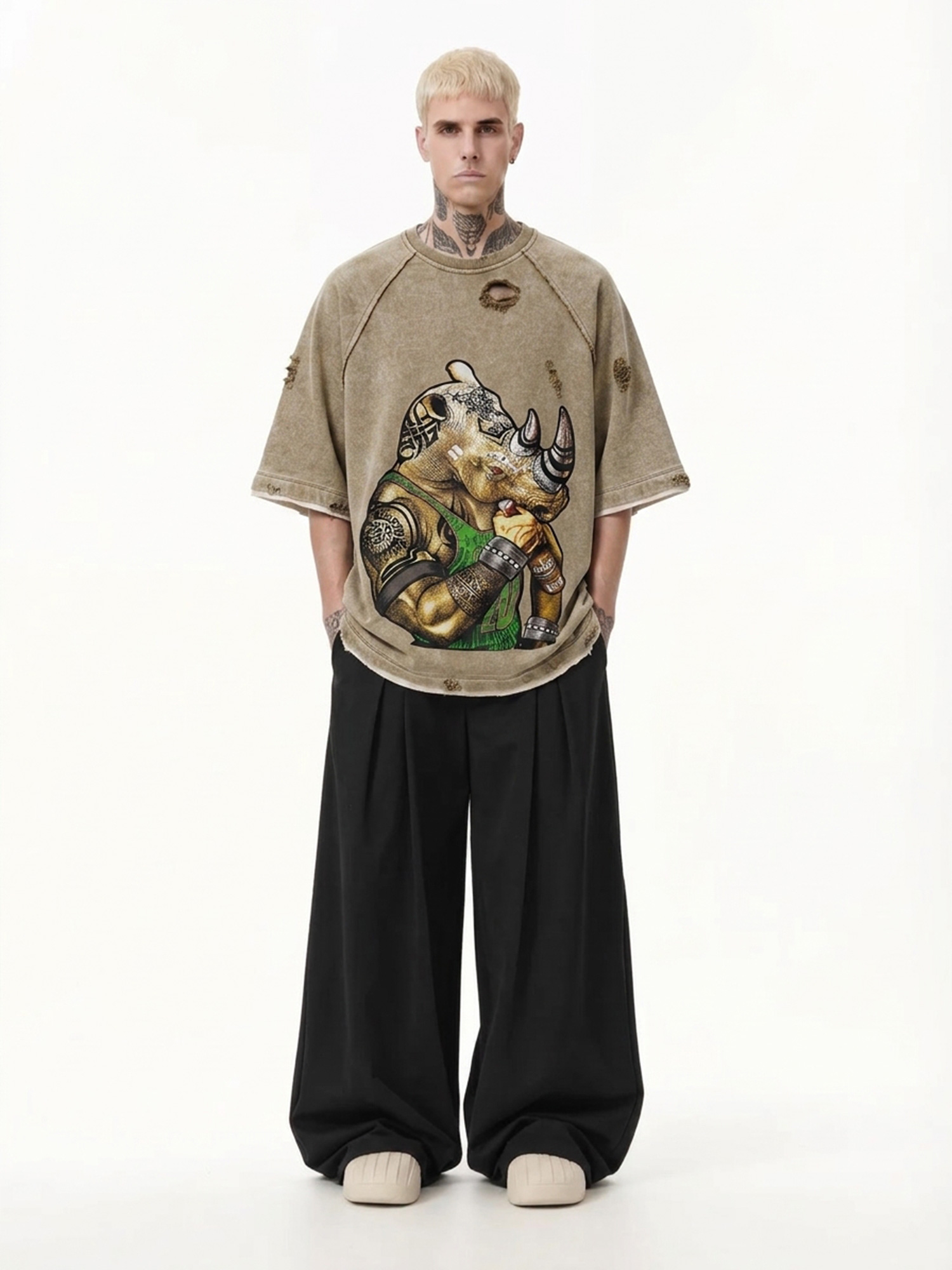
- Process Control for Complex Techniques: Combining DTG with puff print, vintage wash, or 3D embroidery requires localized inspection to prevent elevated scrap rates during heat curing.
Detailed Architectural/Principle Analysis
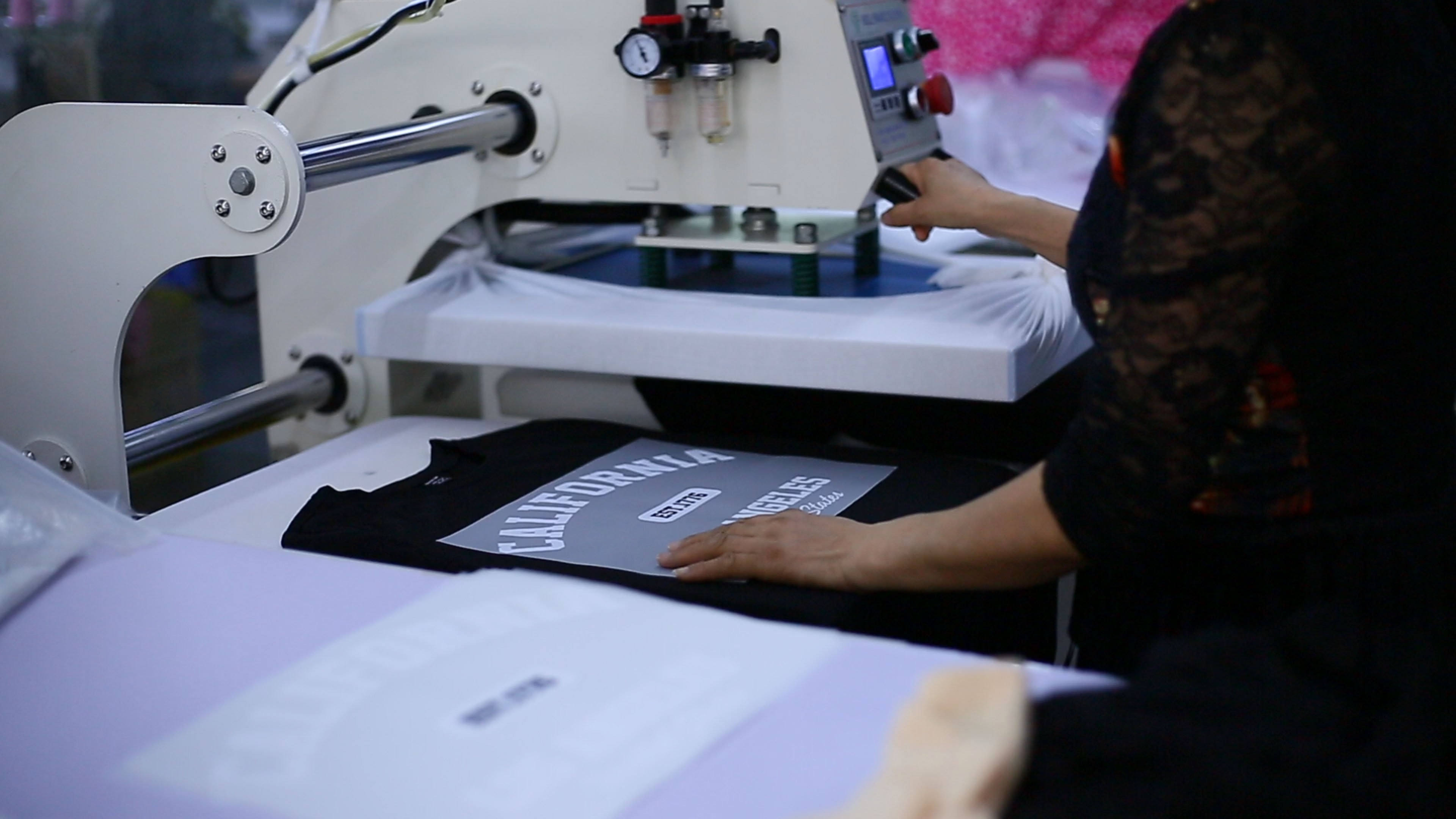
Determining defect limits in DTG printing requires categorizing failures across three main production phases: fabric pre-treatment, direct digital ink jetting, and heat press curing. On heavy cotton fabrics, such as 480-630 GSM textiles used for oversized drop-shoulder t-shirts, proper pre-treatment fluid application is required to prevent white ink absorption into the fibers. Insufficient pre-treatment causes dull color density, while excessive application creates surface staining—both classified as visual defects based on affected surface area.
Quality inspection procedures split defect categories into Critical, Major, and Minor tiers. Critical defects (0% allowance) involve safety hazards or unattached mandatory labeling. Major defects (AQL 2.5 allowance) impair product sellability, such as ink cracking after initial wash tests, print placement exceeding 1.5 cm off-center, or incorrect Pantone artwork reproduction. Minor defects (AQL 4.0 allowance) represent minor aesthetic imperfections that do not affect structural integrity, such as slight heat press haloing that disappears after laundering.
In continuous commercial operations—such as private label developments for online retailers managing 1,000 pieces per SKU across multiple annual drops—maintaining low defect rates relies on mid-production inline checks. Full-process quality control involves approving pre-production samples, executing mid-production inspections on digital print heads, and performing final AQL 2.5 audits prior to export packaging.
Data/Solution Comparison
The table below outlines defect classification thresholds, inspection metrics, and handling protocols for DTG printed t-shirts under standard ISO 2859-1 procedures.
| Defect Classification | AQL Tolerance Threshold | Defect Examples | Standard Action Protocol |
|---|---|---|---|
| Critical Defects | 0.0% | Needle fragments, severe toxic odor, unattached brand labels | 100% batch rejection and mandatory re-inspection |
| Major Defects | 2.5% | Ink peeling, severe misregistration (>1.5cm), wrong Pantone color, wash fastness failure | Factory repair, piece replacement, or financial credit compensation |
| Minor Defects | 4.0% | Loose thread ends (<1cm), minor pre-treatment sheen, slight dimensional variance within tolerance | Trimmed or cleaned during final finishing prior to packing |
Frequently Asked Questions (FAQ)
What is the standard acceptable defect rate for bulk DTG print orders?
The standard allowable defect rate follows ISO 2859-1 AQL 2.5 for major defects and AQL 4.0 for minor defects. In mass DTG t-shirt production, overall defective output should not exceed 2% to 2.5% of the total order quantity.
How do manufacturers compensate for defective garments that exceed AQL thresholds?
When verified batch defect rates exceed agreed AQL limits due to factory responsibility, manufacturers provide repair services, piece replacements, or equivalent financial compensation applied to current or future orders.
What lead times and minimum order quantities apply to custom DTG streetwear apparel?
Custom DTG printed styles typically require a minimum order quantity (MOQ) of 50 pieces per style/color, while blank garments start at 20 pieces. Sample development requires 3 to 15 days, and bulk production takes 20 to 35 days depending on design complexity.
Final Conclusion & Recommendations
Managing defect rates in mass DTG print runs requires strict adherence to ISO 2859-1 AQL 2.5 standards, backed by clear pre-production sample approvals and systematic inline quality inspections. Independent streetwear brands and established retailers should establish clear defect thresholds during the Tech Pack development phase to ensure consistent print quality, color accuracy, and wash durability across seasonal releases. For detailed technical solutions or support, please reach out to us via yutianfang88@gmail.com.
About Us
Dongguan City Dule Garment Co.,Ltd is a professional OEM/ODM streetwear and heavyweight apparel manufacturer established in 2007. Operating two factories totaling 15,000 square meters with 200 employees, the company maintains an annual production capacity of 1.2 million pieces. With an independent R&D team developing over 500 new designs annually, the company serves 200+ brands across 30+ countries in North America, Europe, Australia, and Asia.

Lastest
-
How early should I order puff-print French terry hoodies for a seasonal launch?
2026-10-04 -
What fabric certificates should I request for 400gsm embroidered fleece hoodies?
2026-10-04 -
Can digital printing replace hand painting while keeping a premium artistic feel?
2026-10-04 -
Can I place a small test order for acid-wash distressed T-shirts at a fair price?
2026-10-04 -
Why is the MOQ higher for custom hand-painted long-sleeve T-shirt designs?
2026-10-04
SUBSCRIBE
INQUIRY